
Author: Site Editor Publish Time: 2026-09-18 Origin: Site


RGBW and RGBL are both four-color LED systems used in professional stage lighting. They share the same red, green and blue LEDs, but their fourth color is different: RGBW adds white, while RGBL adds lime.
That one change affects white light, pastel colors, brightness and color transitions. It does not mean that one system is always better. The right choice depends on the event, the colors you use and the overall fixture design.
This guide explains RGBW vs RGBL in simple terms, including their common applications, selection tips and several misunderstandings to avoid.
| RGBW | RGBL | |
|---|---|---|
| LED colors | Red, Green, Blue, White | Red, Green, Blue, Lime |
| Main purpose of the fourth color | Provides a direct white-light option | Fills part of the spectral gap left by RGB mixing |
| Common strengths | Simple white-light control and familiar programming | Fuller whites, softer pastels, smooth transitions and useful brightness |
| Often used for | General stage wash, clubs, live events and installations | Concerts, festivals, theatre, corporate events and mixed-color applications |
| Important point | White-light quality still depends on the white LED and fixture design | RGBL does not automatically mean a wider color range or higher CRI |
The letters alone do not tell the full story. LED selection, optics, calibration, dimming and control software also affect the result.
RGBW stands for red, green, blue and white. RGB creates different colors through additive mixing, while the separate white LED provides a more direct white-light option.
This makes RGBW easy to understand and program, especially when a show often changes between white and saturated colors. The white channel can be used alone or mixed with RGB.
Common applications include:
General stage washing
Clubs and entertainment venues
Weddings and corporate events
Small and medium-sized live productions
However, W does not guarantee perfect white light. Color temperature, color rendering and consistency still depend on the LEDs, optics, thermal control and calibration.
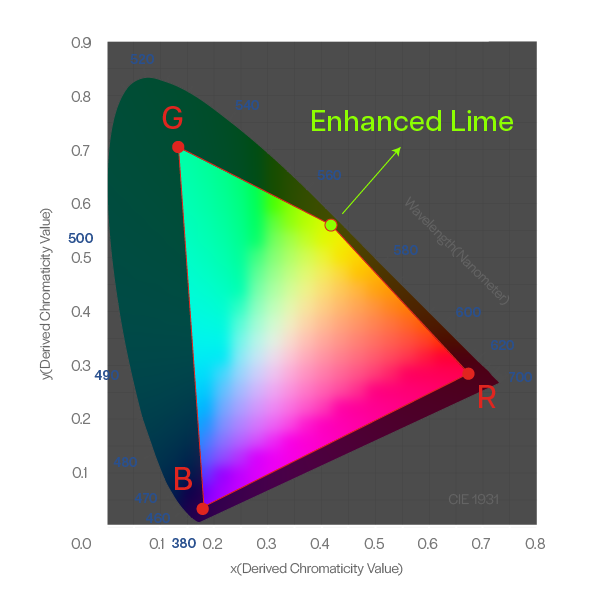
RGBL stands for red, green, blue and lime. Lime is a broad-spectrum emitter that adds light in areas standard RGB mixing may not cover strongly.
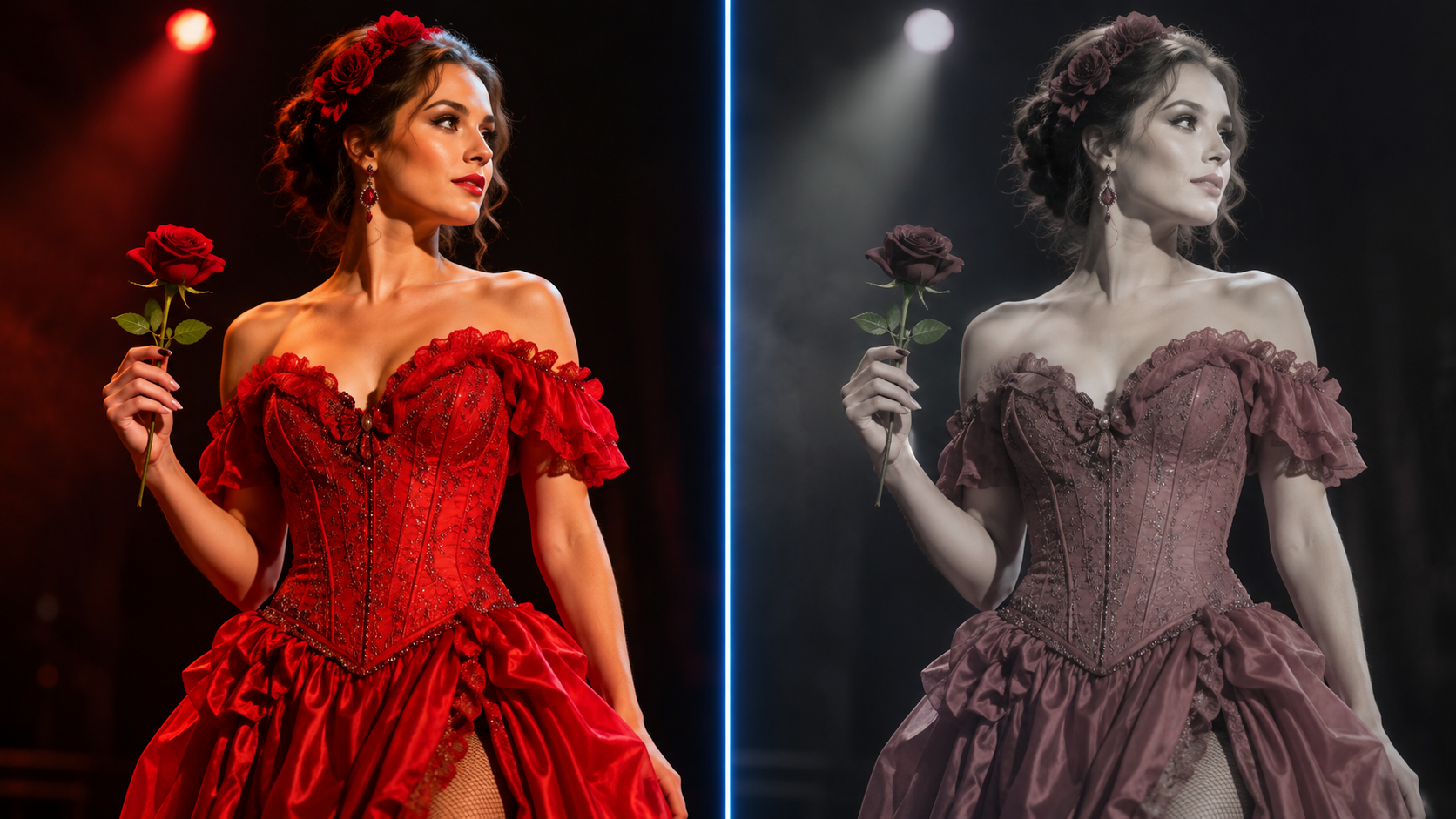
In practice, Lime can support fuller whites, softer pastels and smoother transitions. Because the human eye is highly sensitive in this part of the spectrum, Lime can also contribute strongly to visible output.
RGBL is not a brand-new technology. Lime has been used in professional entertainment fixtures since at least 2014, but it has become more visible as more users look for flexible color mixing and better white and pastel performance. ETC's explanation of Lime LEDs also notes that Lime can fill part of the missing spectrum and add significant brightness.
Common applications include:
Concerts and music festivals
Theatre and live performance
Corporate events and product launches
Productions using whites, pastels and smooth color changes
The result still depends on the complete fixture, including its LEDs, optics, calibration and color-mixing software.
Start with the project rather than the LED label.
A familiar four-color system that is easy to program
A direct and simple white-light channel
General-purpose stage washing and color effects
A practical solution for clubs, events or fixed installations
Check color temperature, consistency and CRI instead of assuming every RGBW fixture produces the same white.
Fuller-looking whites and pastel colors
Smooth movement between saturated and soft colors
Strong useful output across different color mixes
A flexible color system for concerts, festivals and varied event work
RGBL can be useful when one fixture must create both bold effects and softer background washes. Judge actual performance from photometric data, controlled test images or a live demonstration.
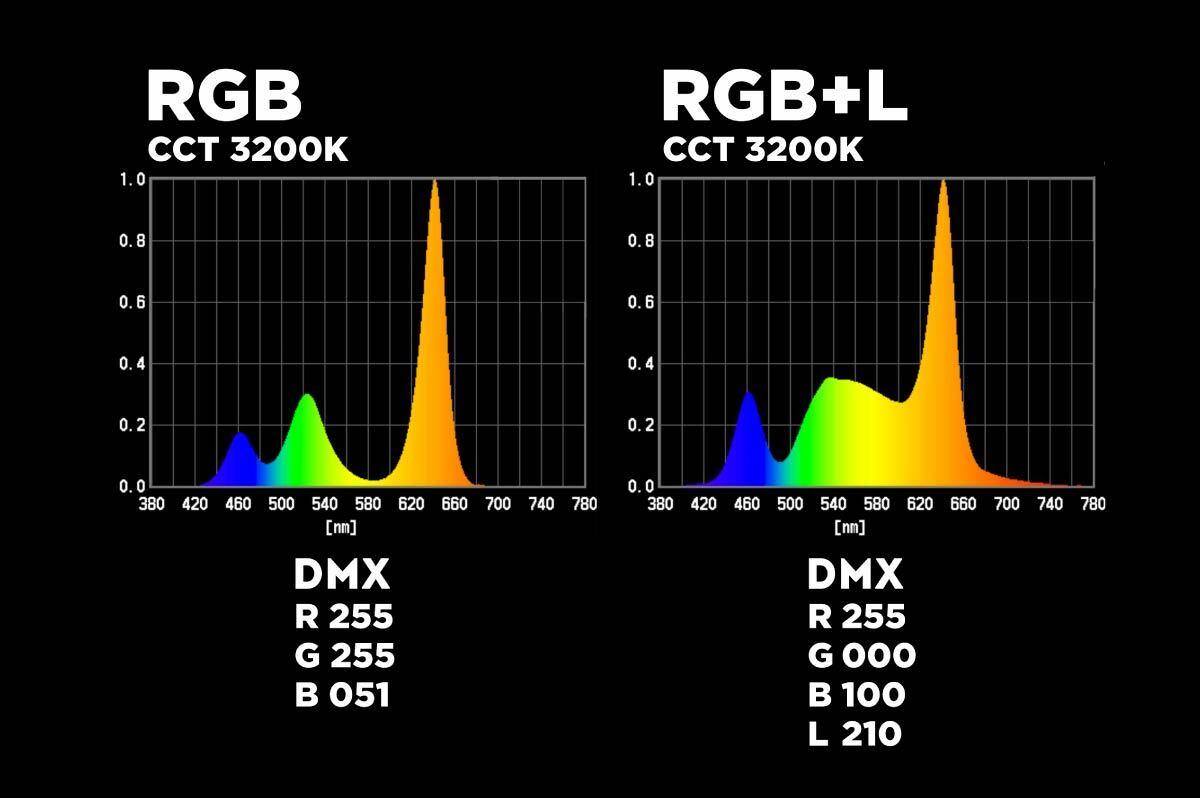
Not necessarily. Lime often contributes more to brightness and spectral coverage than to the outer boundary of the color range. It can make some colors and whites look fuller without automatically creating more extreme colors.
A white LED makes white output more direct, but its color temperature and spectrum still matter. Two RGBW fixtures can produce very different whites.
RGBL alone does not guarantee a higher CRI. If color rendering matters, ask for measured CRI data at the color temperatures you plan to use.
The number of LED colors is only one part of the system. Optics, LED consistency, dimming, thermal management and software can be just as important.
Refresh rate and LED color system are different specifications. RGBL describes the colors used in the LED source. Refresh rate describes how frequently the LEDs are driven.
An adjustable refresh rate can help reduce flicker or scan lines on camera. It matters for live streaming, concert recording, broadcast work and high-speed cameras, whether the fixture is RGBW or RGBL.
What Else Should You Check Before Choosing a Fixture?
Before selecting a stage light, also check:
Color temperature and CRI: Can it produce the whites and color rendering your projects require?
Color consistency: Do several fixtures produce matching colors at the same settings?
Dimming: Are low-level fades smooth, without sudden steps?
Refresh rate: Is it suitable for the cameras used at your events?
Optics and zoom: Can the fixture move between narrow effects and wide stage coverage?
Pixel control: Can individual LEDs be programmed for chases, patterns and other effects?
Weather protection: Is it intended only for indoor use or also for outdoor stages?
Control compatibility: Does it support your protocols and channel modes?
This checklist helps buyers compare complete fixtures rather than choosing only by the LED label.
The value of RGBL becomes clearer when it is combined with suitable optics and control. Stella Maris is an IP65 LED moving head wash for concerts, festivals and indoor or outdoor stages.
Its 19 × 60W RGBL LEDs support saturated colors, fuller whites, soft pastels and smooth transitions. Individual pixel control lets each main LED create patterns and chases as well as conventional stage washing.
A rotating integrated lens creates Bee-Eye and kaleidoscope-style effects. Its 3.7°–50.4°, 14× motorized zoom moves from a narrow aerial beam to a wide stage wash.
Its selectable 1K–32KHz refresh rate can be adjusted for different recording conditions to help reduce visible flicker. This feature is separate from RGBL, but useful when a show is designed for both live audiences and cameras.
The IP65-rated housing supports indoor and outdoor use. For rental companies and event suppliers, one moving head wash can therefore cover more effects and project types.
IP65 | 19 × 60W RGBL | Individual Pixel Control | Bee-Eye Effects | 14× Zoom | 1K–32KHz Refresh Rate

Not always. RGBW offers a direct white channel, while RGBL can support fuller whites, softer pastels and smooth transitions. The better choice depends on the fixture and project.
Lime can contribute strongly to visible output because the human eye is sensitive in that part of the spectrum. Actual brightness still depends on the LEDs, power and optics.
Yes, but the same DMX values may not produce exactly the same color. Visual matching, calibration or console color tools can help.
RGBW and RGBL are both useful. RGBW provides a direct white-light channel, while RGBL uses Lime to fill part of the RGB spectrum and support fuller whites, softer pastels and smooth transitions.
Instead of choosing only by the LED label, compare the complete fixture: its measured color performance, optics, dimming, refresh rate, control options and intended application. That is the most reliable way to find the right stage light for your projects.


