
Author: Site Editor Publish Time: 2026-09-11 Origin: Site


DMX512 has been a widely used communication protocol for professional stage lighting for decades. It allows a lighting console to control fixtures, including dimming, color, movement, zoom, and effects. But when a lighting system becomes larger, controlling fixtures is only part of the job. Technicians also need to identify, configure, and manage them efficiently.
This is where RDM (Remote Device Management) becomes useful.
Traditional DMX communication is primarily one-way: the console sends control data to the fixtures. RDM adds bidirectional communication, allowing compatible controllers and fixtures to exchange device information and perform supported management functions.
For example, RDM can help with fixture discovery, configuration, addressing, and status monitoring. This can reduce manual work when technicians are dealing with large numbers of fixtures during installation, rental setup, or touring productions.
However, RDM is not a replacement for DMX512. It works alongside DMX and provides additional device-management capabilities. It is also important to note that RDM support does not automatically mean every RDM function is available. Actual capabilities depend on the functions implemented by the fixture and controller.
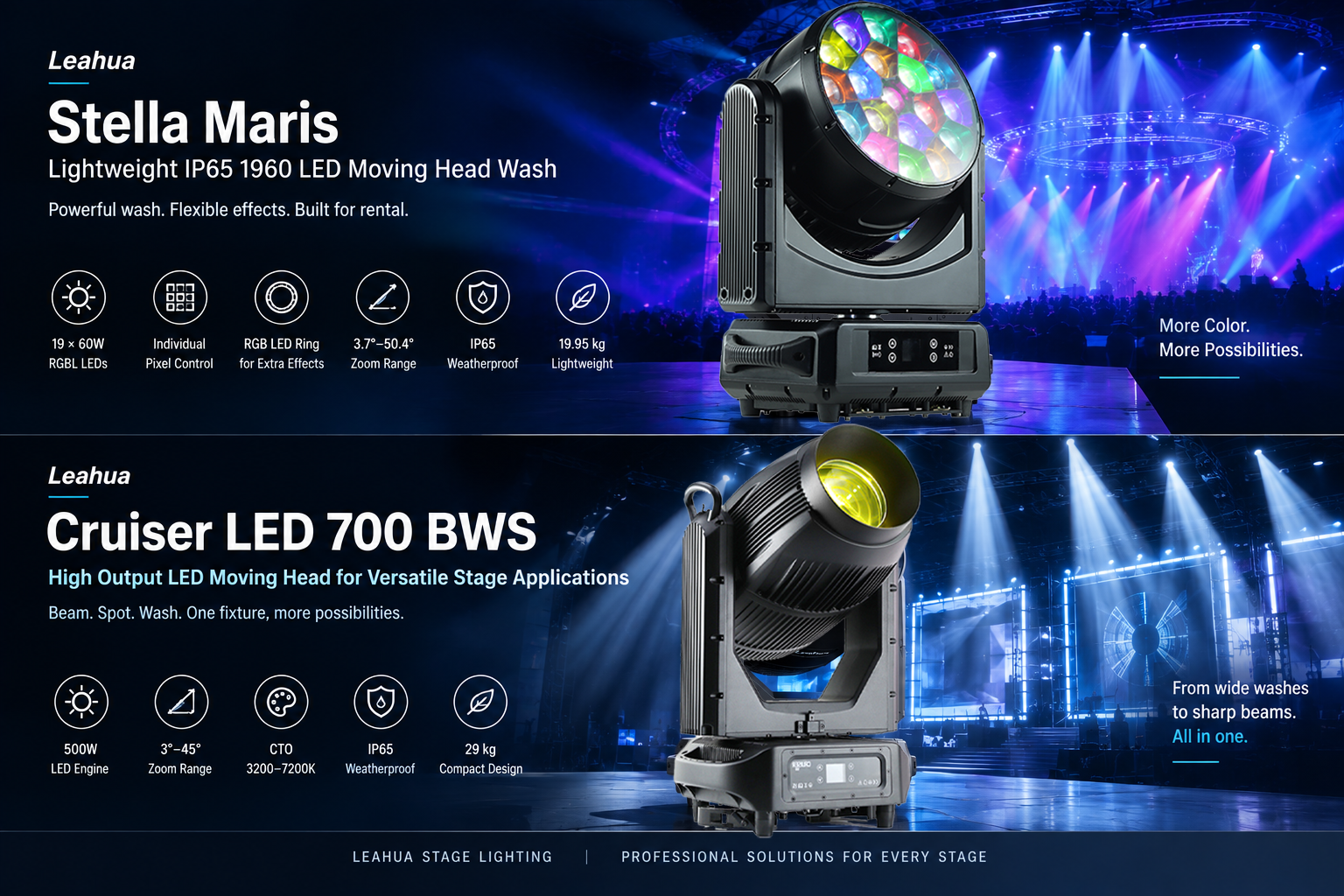
Leahua’s Stella Maris 1960 LED Moving Head Wash and Cruiser LED 700 BWS both support DMX512 and RDM, making them suitable for professional lighting systems where reliable fixture control and management are important.
Ultimately, DMX controls the show, while RDM helps technicians manage the lighting system. As professional rigs continue to grow in size and complexity, this additional communication capability can make setup and maintenance more efficient.


