
Author: Leahua Lighting Publish Time: 2026-06-18 Origin: Site


| Table of Contents |
|
When selecting professional stage lighting fixtures, many buyers focus first on one specification: brightness.
However, brightness alone does not define the quality of a lighting solution.
For different applications — from concert touring and outdoor festivals to theaters, studios, and architectural projects — lighting priorities can be completely different.
Some projects require highly accurate color reproduction. Others require maximum output, long projection distance, and reliable performance in demanding environments.
This is why understanding the relationship between CRI (Color Rendering Index) and luminous efficiency (lm/W) is essential when choosing LED stage lighting fixtures.
A professional lighting solution is not about choosing the highest specification.
It is about choosing the right performance balance for the right application.
CRI (Color Rendering Index) measures how accurately a light source reproduces the colors of objects compared with natural light.
The value ranges from 0 to 100. A higher CRI indicates more natural and realistic color reproduction.
In professional stage lighting applications, high CRI performance helps:
· Present natural skin tones for performers
· Restore accurate costume and scenery colors
· Improve visual quality for cameras and broadcasting
· Create a more immersive audience experience
Traditional CRI measurement is based on eight standard color samples (R1-R8).
However, professional lighting designers often pay close attention to R9, which represents saturated red reproduction.
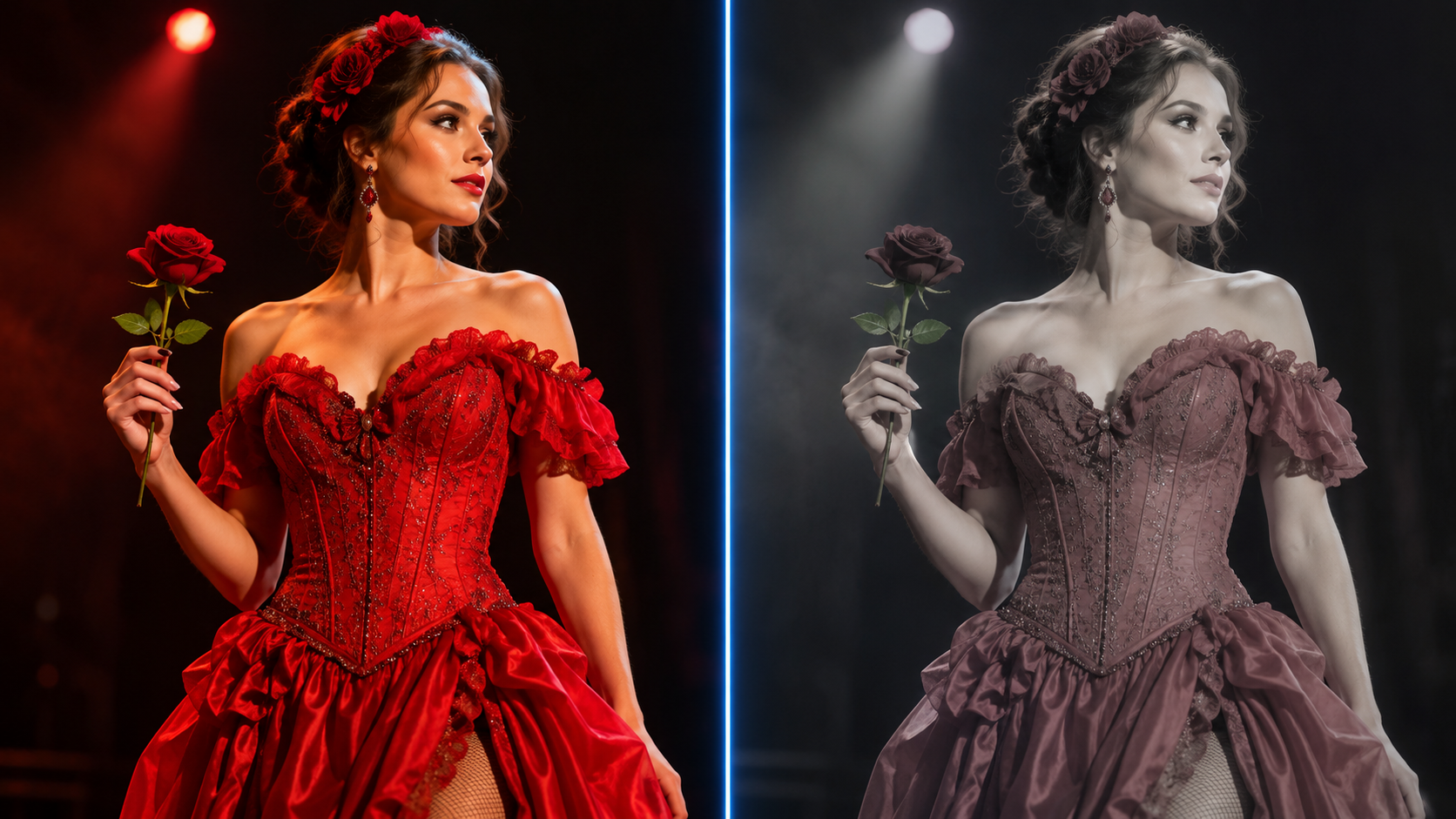
Strong R9 performance is especially important for:
· Human skin tones
· Red costumes
· Warm color effects
· Film and broadcast applications
For theater lighting, studio lighting, and high-end entertainment productions, CRI is not just a number — it directly affects the final visual result.
Luminous efficiency, measured in lumens per watt (lm/W), describes how much light output a fixture produces from each watt of electrical power.
A higher luminous efficiency means:
· More brightness with less power consumption
· Lower energy costs
· Reduced heat generation
· Improved long-term operating efficiency
For large-scale applications such as:
· Outdoor concerts
· Music festivals
· Touring productions
· Large entertainment venues
high luminous efficiency is extremely important because lighting fixtures often operate for many hours at high output levels.
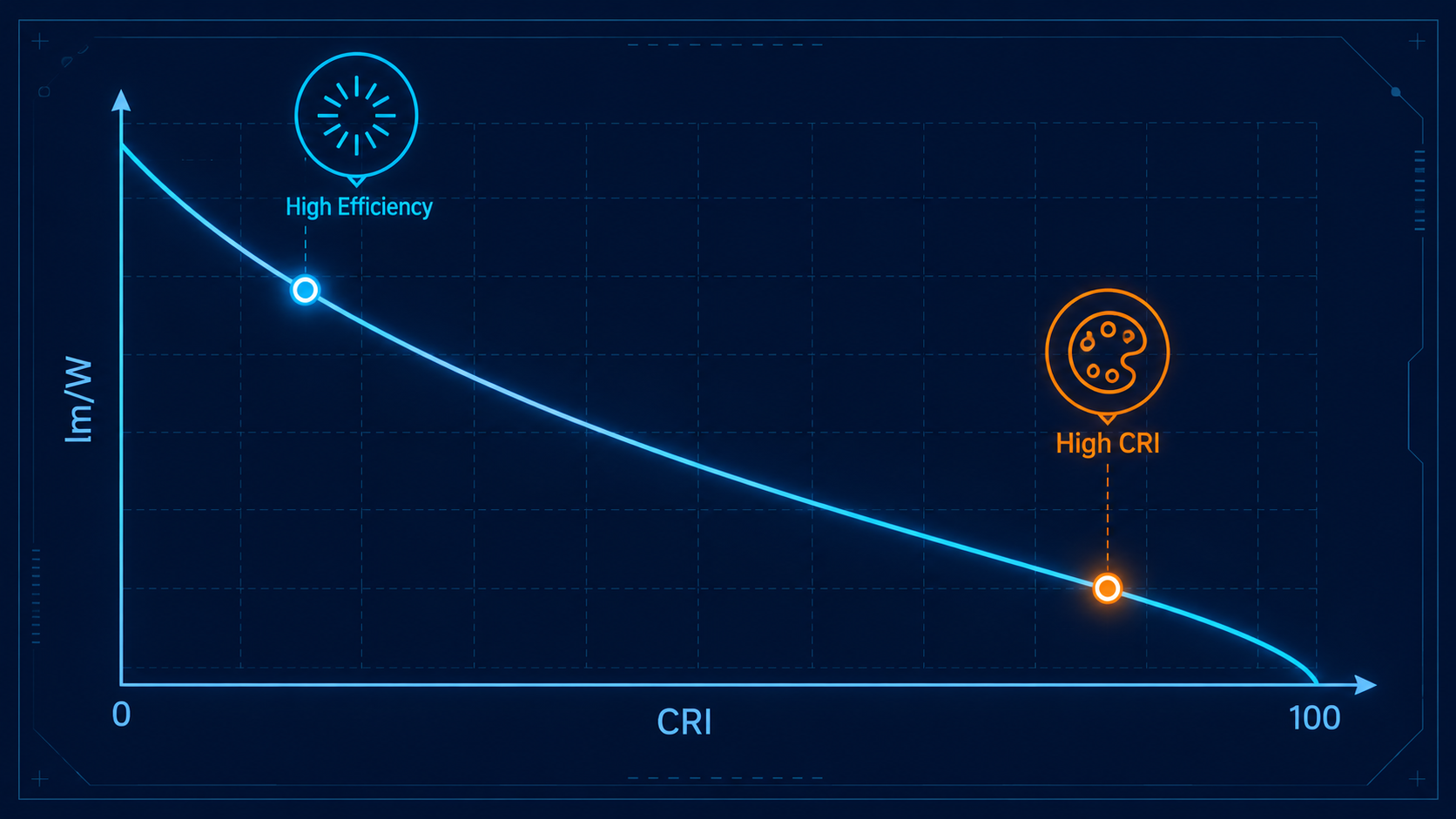
CRI and luminous efficiency are not always easy to maximize at the same time.
This is mainly related to LED spectrum design.
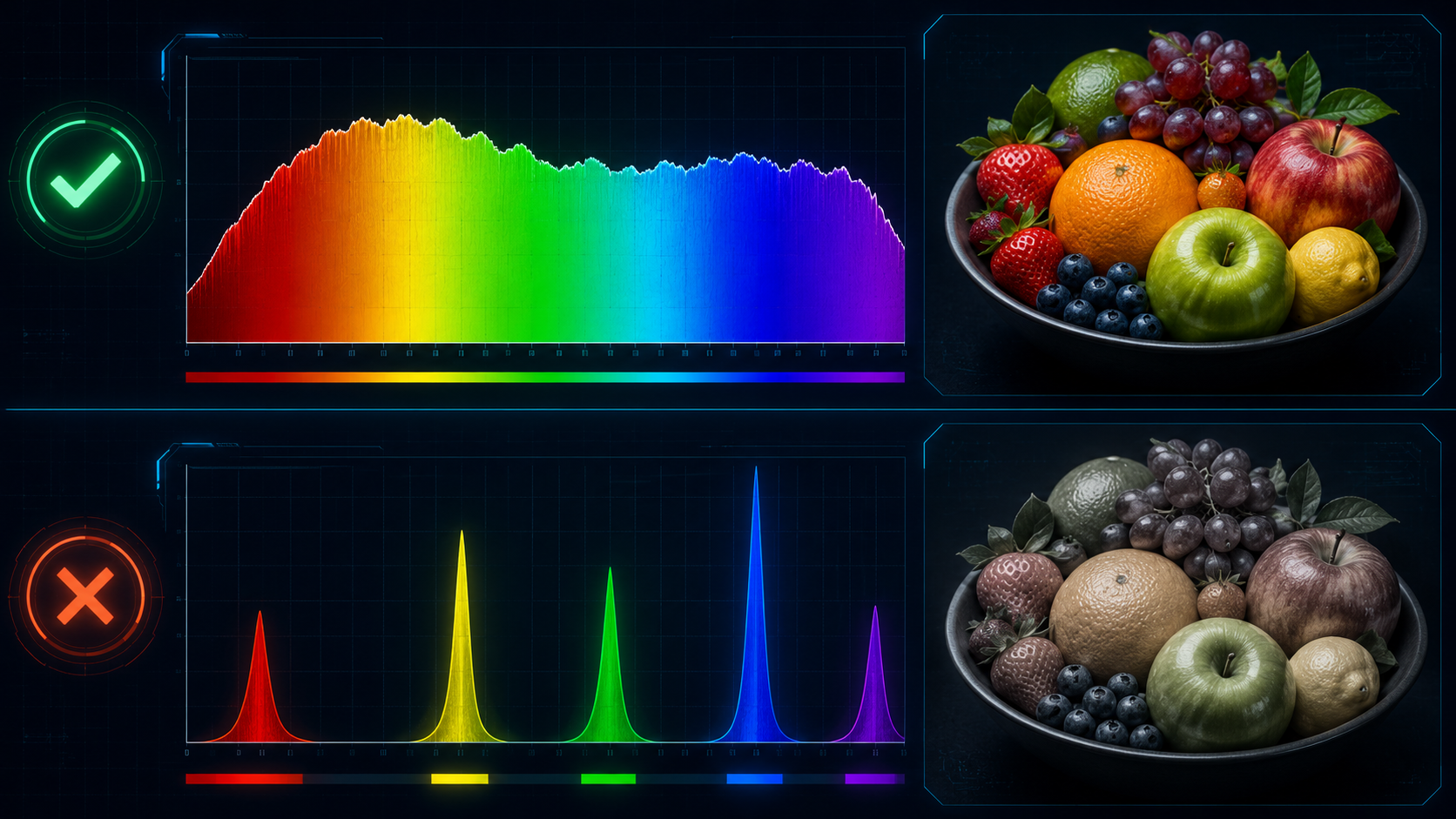
To achieve excellent color rendering, an LED light source needs a broader spectrum, including stronger red wavelength output.
This helps create more natural colors, but some electrical energy is distributed into wavelengths that contribute less to perceived brightness.
The result:
Higher color accuracy may reduce maximum luminous efficiency.
To achieve higher lumen output, LED systems can concentrate more energy in wavelengths where human eyes are most sensitive.
This improves brightness and efficiency but may reduce color accuracy.
The result:
Higher efficiency may come with lower CRI performance.
Therefore, CRI and luminous efficiency should not be viewed as competing specifications.
They represent different priorities.
The correct choice depends on the application.
Different professional lighting fixtures serve different purposes.
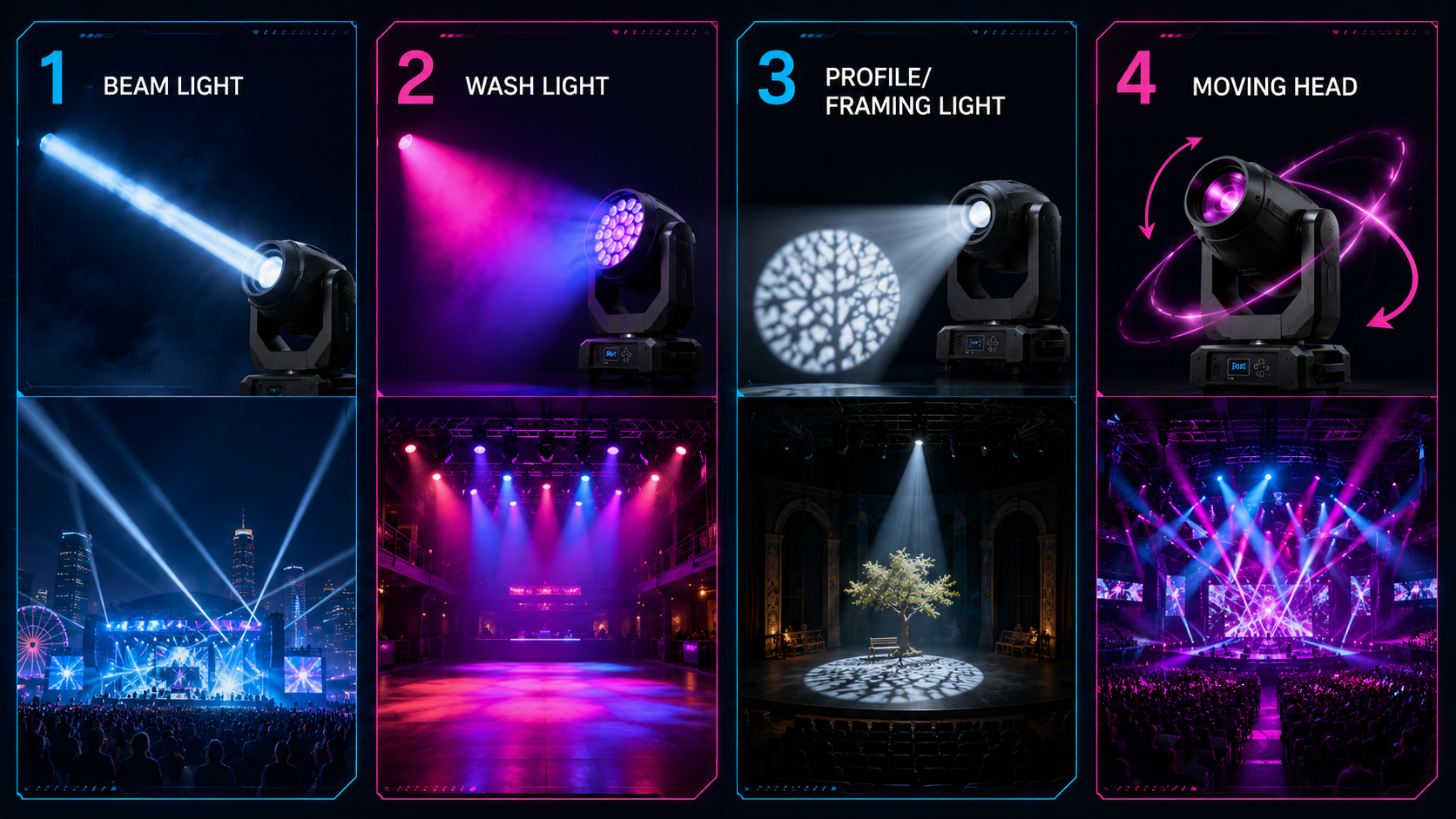
Moving head lights are among the most versatile fixtures in modern entertainment lighting.
They combine:
· Beam effects
· Wash functions
· Spot projection
· Framing systems
· Dynamic movement
For concert touring, theater, and live events, professional moving head fixtures require a balance between:
· Light output
· Color performance
· Optical quality
· Thermal stability
· Long-term reliability
High-end productions may prioritize higher CRI, while large outdoor events may prioritize brightness and projection power.
Beam lights are designed to create sharp, powerful light beams visible over long distances.
They are widely used in:
· Concert tours
· Outdoor festivals
· Large-scale events
For these applications, the key factors are usually:
· Beam intensity
· Projection distance
· Beam sharpness
· Output stability
CRI is usually less critical because the main purpose is creating a strong visual atmosphere rather than accurately reproducing object colors.
LED wash lights are commonly used for:
· Stage color coverage
· Event atmosphere
· Architectural effects
· Entertainment venues
Important performance factors include:
· Color mixing quality
· Smooth dimming
· Color consistency
· Zoom range
For creative lighting environments, color expression and dynamic effects are often more important than maximum CRI.
Profile lights and framing fixtures are widely used in:
· Theater productions
· Museums
· Architectural lighting
· High-end events
These applications require:
· Accurate beam shaping
· Sharp projection
· Excellent color reproduction
· Precise control
For these projects, optical quality and CRI performance are usually more important than maximum lumen output.
Application | Main Priority | Recommended Focus |
Television Studio / Film Production | Color accuracy | High CRI, TLCI, spectrum quality |
Theater / Drama / Museum | Natural appearance | High CRI, optical precision, color consistency |
Concert Touring / Outdoor Festival | Visual impact | Brightness, beam performance, thermal reliability |
Clubs / Live Houses | Creative atmosphere | Color effects, dimming, dynamic functions |
Architectural Lighting | Environment integration | Color consistency, IP rating, reliability |
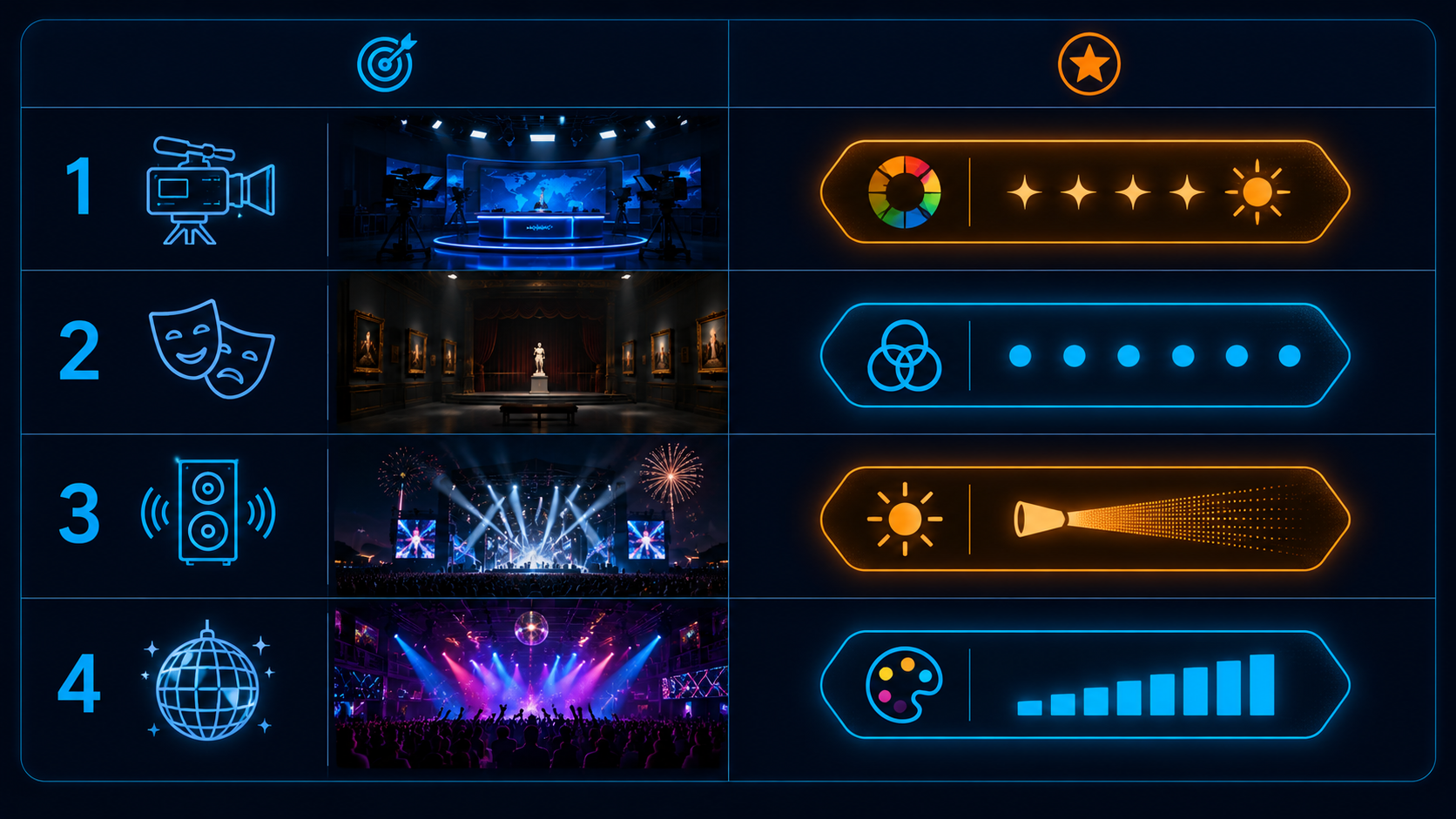
There is no universal answer to whether CRI or luminous efficiency is more important.
· The creative goal
· The application environment
· Required visual impact
· Operating conditions
· Long-term maintenance expectations
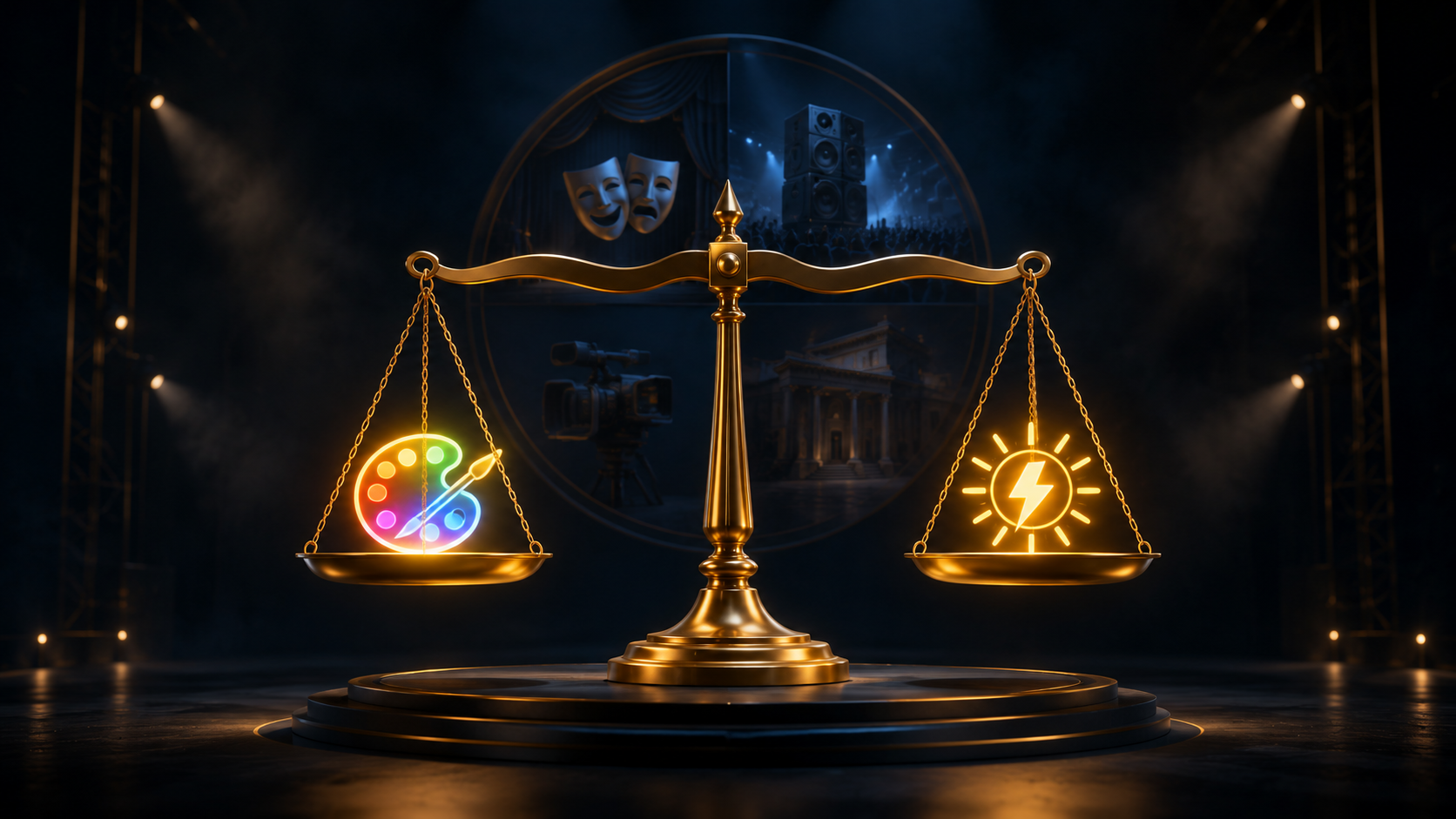
A theater production, an outdoor festival, and an architectural lighting project all tell different stories — and each requires a different lighting approach.
At Li Lighting, we believe professional stage lighting is about finding the right balance between technology and application.
From high-output outdoor moving head lights to reliable IP65/IP66 waterproof lighting solutions, our goal is not simply to create brighter fixtures.
Our goal is to provide lighting solutions that deliver the right performance for real-world projects.
Because the best lighting is not only about how bright it is — it is about how effectively it brings a vision to life.


